

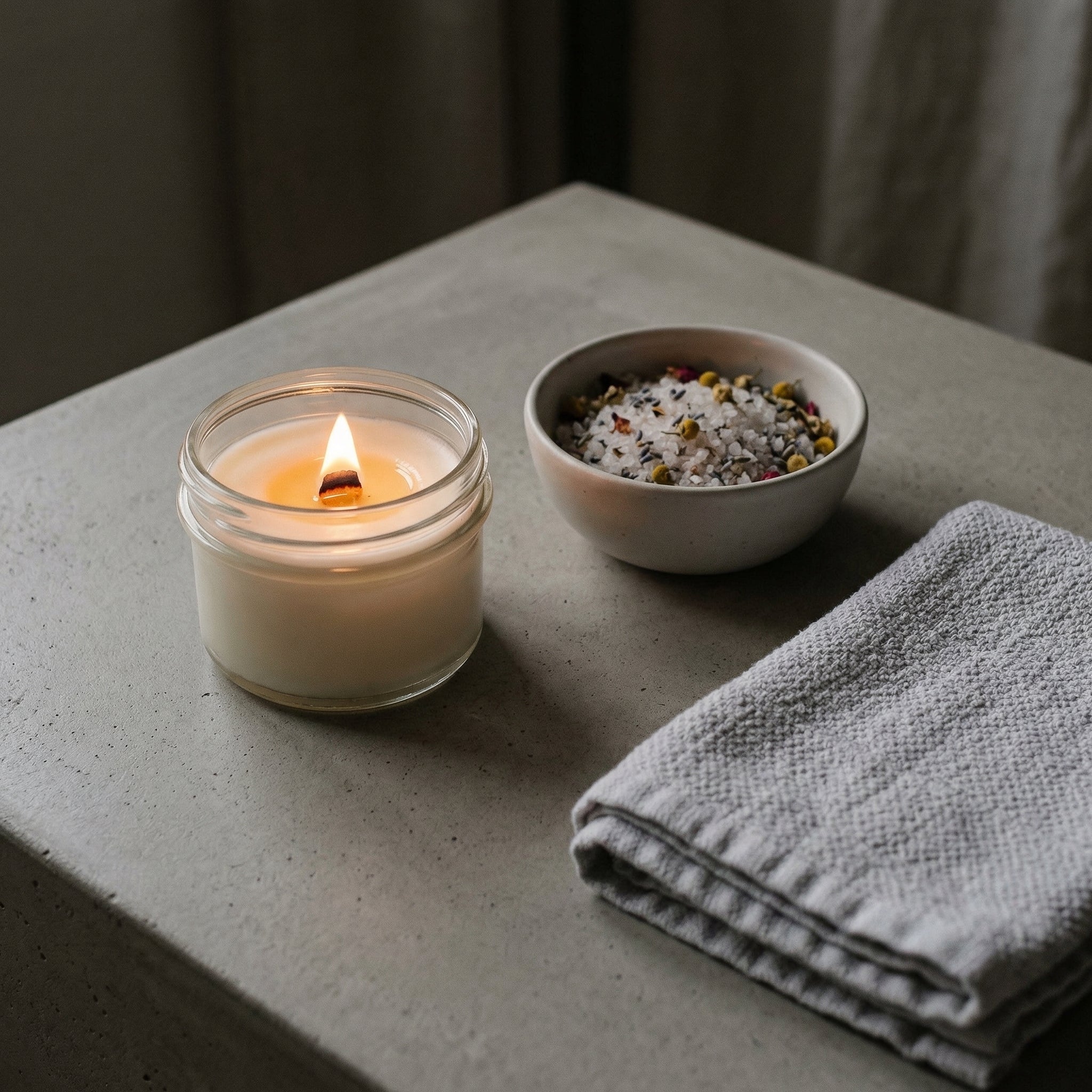
A good night routine does not need more steps. It needs less decision-making.
Most people do not struggle to relax at night because they lack options. They struggle because the end of the day has no clear structure.
Screens stay on. Tasks extend. The transition into rest is undefined.
A simple night routine works by removing that ambiguity. It gives the evening a starting point that does not depend on motivation.
Why Most Night Routines Fail
Most routines fail because they rely on intention instead of structure.
At the end of the day, decision fatigue is already high. Adding multiple steps or choices increases friction instead of reducing it.
What works better is a fixed sequence that does not change.
Instead of asking what to do each night, the routine is already defined.
The Easiest Night Routine to Relax Your Mind and Body
A functional night routine can be built with three simple elements:
- Warm water to create a physical shift
- Low light to reduce visual input
- Consistent sequence to remove decisions
These elements are effective because they simplify the environment.
This is the basis of a repeatable evening structure that can be followed without adjustment.

If you prefer a simpler version without a full routine, you can start with a single calming element instead.
Step 1: Create a Clear Starting Point
A routine needs a defined beginning.
Without that, the evening continues in the same state as the day.
Warm water is an effective starting point because it introduces a clear shift without requiring effort.
This can be a bath, a soak, or simply preparing the water. The key is that it happens the same way each time.
Step 2: Reduce Visual Input
Lighting affects how the environment is processed.
Bright overhead light keeps the space active. Lower, more focused light simplifies it.
Candlelight works because it limits visual information. It creates a single point of focus instead of multiple inputs.
That reduction helps the environment require less attention.
This is why candlelight is often included in a simple night routine setup.

Step 3: Keep the Environment Consistent
The routine becomes effective when it is repeated without variation.
The same objects. The same order. The same environment.
This consistency removes the need to think through the process each night.
Over time, the sequence becomes automatic.
Step 4: Avoid Adding Complexity
More steps do not improve a night routine. They make it harder to maintain.
A routine that requires effort will eventually be skipped.
A routine that reduces effort can be repeated.
This is where a structured set of tools becomes useful — not because it adds more, but because it removes decisions.

Who This Type of Routine Works For
This approach works best for people who:
- prefer clear structure over flexible routines
- want to reduce decision-making at night
- are building consistent daily habits
- do not want complex systems
It is less effective for those looking for highly variable or performance-driven routines.
The environment also plays an important role, especially when supported by a calmer home setup.
A Night Routine Should Reduce Effort
The purpose of a night routine is not to add another task.
It is to make the transition into rest easier to begin.
That happens when the structure is clear, simple, and repeatable.
Warm water. Low light. Fixed sequence.
Nothing else is required.
If you want a way to implement this without building it from scratch, you can explore a complete evening routine structure here.