

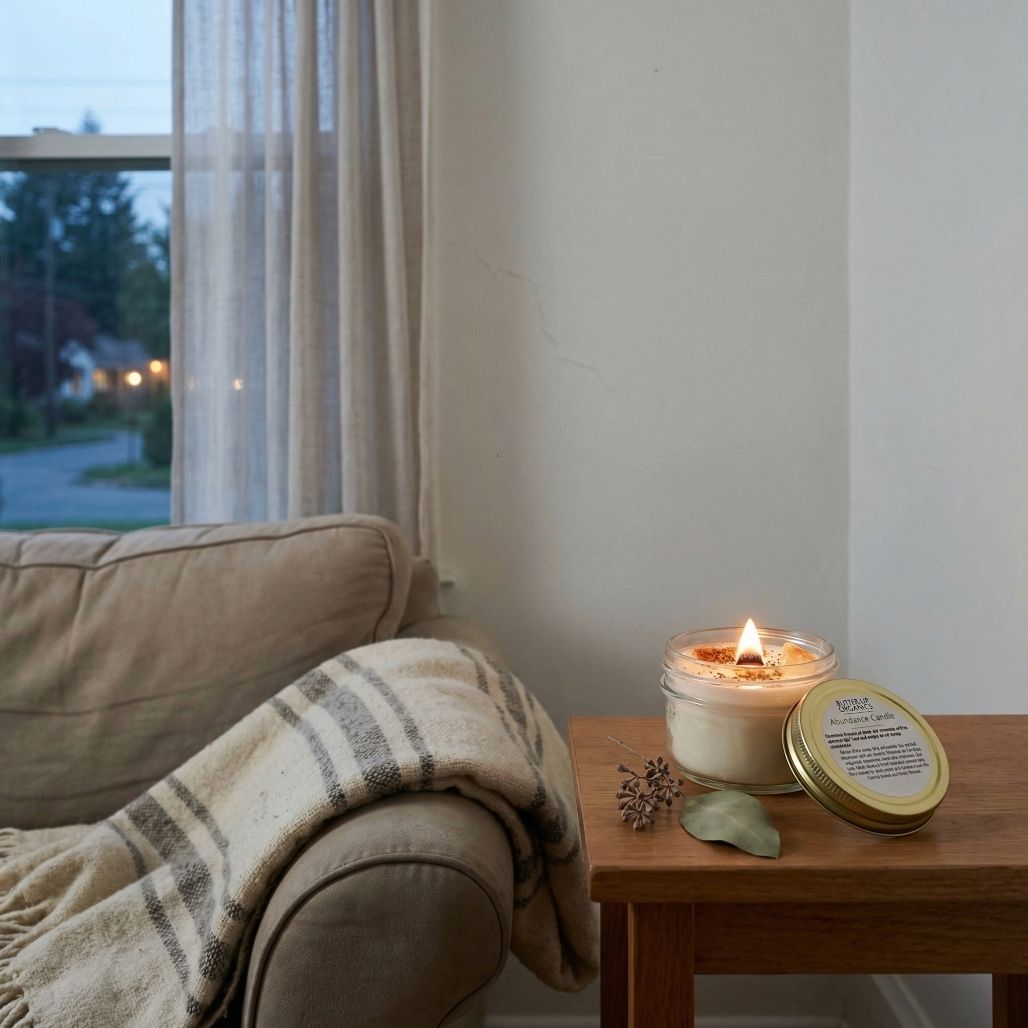
A home does not need to change completely to feel different. Small adjustments can shift how a space is experienced.
Many people think creating a calmer home requires a full reset — new decor, more time, or a complete system.
In reality, it often comes down to a few controlled changes that reduce noise and simplify the environment.
The goal is not to redesign your space. It is to make it easier to be in.
Why Most Spaces Feel Overstimulating
Many homes are not intentionally overwhelming — but they accumulate visual and sensory input over time.
Too many objects. Too much light. Too many signals competing at once.
This creates a background level of noise that makes it harder to relax, even when nothing specific is wrong.
Calm Comes From Reducing Input
A calmer space is not created by adding more elements.
It is created by reducing what demands attention.
This can be done through small adjustments:
- lowering light intensity
- limiting visual clutter
- using one consistent focal point
These changes do not require effort to maintain once they are in place.
This is the same principle behind a simple evening setup — it simplifies the environment instead of adding to it.

Start With Light
Lighting is one of the fastest ways to change how a space feels.
Bright overhead lighting keeps a room active. Lower, softer light reduces visual intensity.
A single candle or a small, controlled light source can shift the room without requiring any other change.
This works because it reduces how much the eye needs to process.
Limit What Is Visible
Not everything needs to be removed.
But not everything needs to be visible either.
Surfaces with fewer objects are easier to process.
They require less attention and create a sense of order without effort.
This is why a space with a few intentional elements feels different from one with many unrelated ones.

Use One Consistent Element
A single repeated element can anchor a space.
This might be:
- a candle
- a scent
- a specific object used daily
When the same element appears consistently, the space becomes more predictable.
This reduces the need to interpret the environment each time.
A structured evening setup works this way — it introduces a fixed point into the space.
Why Small Changes Work Better
Large changes are harder to maintain.
Small changes, once implemented, require no additional effort.
This is what makes them effective over time.
They do not depend on motivation. They simply exist.
Who This Approach Works For
This works best for people who:
- feel overstimulated in their environment
- do not want to redesign their home
- prefer simple, practical adjustments
- want something that requires no ongoing effort
It may not be ideal for those looking for full interior redesign or aesthetic transformation.
A Calmer Space Does Not Require More
It requires less.
Less light. Less clutter. Less variation.
When the environment asks for less attention, it becomes easier to settle into it.
If you want a simple way to introduce this without changing your entire space, you can explore a simple evening setup here.